
Hi there!
I am Anna Hiemstra, a third year bachelor Industrial Design student at the Eindhoven University of Technology.
And this is my Design Portfolio
The world is a chaotic place and I contribute to it in the same way. I am a 22 year-old Industrial Design student driven by a deep fascination for human differences, a love for out-of-the-box prototyping, and a desire to solve complex, real-world problems.

My vision as a designer
As a designer that loves new experiences, I design by thinking a few steps ahead.
While daily life becomes more digital, there is a growing need of keeping technological innovations understandable and intuitive for users as well as to keep the technical aspect from taking over psychologically or culturally important human interactions and activities. (Mahamuni et al., 2015)
I create society-centered and adaptable designs that complement basic human interactions and needs by combining research and experience with practice. Evidence based-insights from both research as well as first- or secondhand experiences are my main base to understand human behavior and (re-)design utility items. To then prototype, gives me the opportunity to enable stakeholders to interact with the prototype and give feedback. I believe that (re-)designed utility items should be made with a half eye on the future. Creating products now that will last longer than a lifetime, when used as intended, will be worth the investment (Le Creuset, 2026). This idea is part of the circular economy concept and the trend where consumers are in a shift towards slow consumerism (Ballisticarts, 2014).
My vision grows from a position where independency comes first. From there, a well designed environment enables people to connect. My previous designs like Tacti and Yggdrasil have confirmed this direction. For example, in the project of Yggdrasil we created a system to help people reconnect with nature, primarily in their homes. With additional aspects of doing this together with others both in their own homes as well as taking this connection outside. Also, Tacti, which is a glove to give people with hearing disabilities the opportunity to still experience concerts and other musical events so that they can share such experiences with able-hearing people. These projects helped me realize that I am most motivated when designing tools and experiences that help people to be put in their power and help them enjoy their lives how they prefer, instead of giving users clear cut experiences.
What helped me develop as a designer in these projects was the necessity to design for longer term use. Reconnecting with nature for example is a process not to be rushed, but to experience for someone on their own tempo while staying relevant in the ever evolving digital environment.
With my designs I try to keep a connection between the digital future and human nature, ensuring that, while technology keeps advancing, our psychological and cultural well-being won't be compromised. Ultimately, my goal is not to create the user experience, but to design the tools and environments that give independence, create space for meaningful human connections, and enable people to live their lives authentically.
Professional Identity
The world is a chaotic place to which I contribute in the same way. I have always been someone curious about everything. As a child similarities are often focused on, however I have loved asking about differences since I can remember. I have never been someone who wasn’t open for new and different ideas, which is how I came to sail across the Atlantic Ocean on a Tall Ship and do an exchange year in Chubut,
Argentina. These experiences have shown me that I will adapt to situations and cultural norms when needed, but I have grown to appreciate my own values even more since I have lived with them in new settings where mine aren’t always the, so called, default values that I was used to at home.
When designing I prefer to have a wide variety of ideation materials at hand and just let my iterations flow through the different ideation techniques and prototyping materials. Initially there are no specific steps I take other than defining what type of design is asked from a brief. Therefore I acknowledge that the beginnings of my design processes are in advance undefined. This loose structure helps me to work
in and think about multiple questions at once and take big steps, however, the past has shown that this can result in skipping details of the brief. The positives of working this way have shown to improve overall ideas when working on more than one design. Since thinking of a new concept that might not work for one project , it could still be used for another.
My interests lie in complex and out-of-the-box solutions. Trying to keep on finding new and different solutions is what motivates me to keep on iterating. I find that this especially helps while reflecting on decisions and works. To see the challenge for improvements as an opportunity really is a valuable mindset to have. It has helped me in multiple settings like academic and extra-curricular to keep improving. In teamwork this can collide if perceived as more perfectionist that the average of the group and I’m working on not letting than influence me as much as it does. Because of my interest in differences and cultures I tend to focus on the User & Society expertise area. This is mostly noticeable in my process by first wanting to find a literal problem when starting a project, even when there might not be one stated in a design brief at all.
Moving on to prototyping the Technology & Realization expertise area will take over. A practical design that helps and improves a situation of the user is how I envision all my designs. This means that the interaction usually overtakes aesthetics until a demonstration gets close. During the last couple of months my interests and thus knowledge towards a more Math, Data and Computing side of design has been growing. I am thrilled to see how this will impact my identity in the future.
Personal Development Plan 07-01-2026
To show my growth over the past year I have incorporated the PDP that I stared this year with and kept up to date up until January on the left. Some things to notice is that my planning didn't work out the way I had anticipated. However, through adapting to my new plans helped me discover new interests and part of the Expertise Areas which I hadn't realized existed.
My Expertise Areas
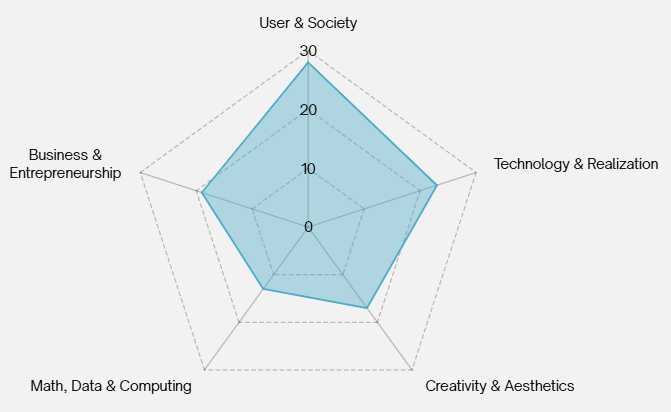
In the graph on the left you can see where I believe my strengths and weaknesses are within the Expertise Areas. In the text below I explain why and how I will be improving my Expertise Areas
User & Society
To design for users and society, is to pay attention to the experiences and interactions with your design. This means that a design should be designed with human behaviour and psychology, and especially the behaviour and psychology of the target audience, in mind. Besides the user, the context where the product will be used is also important to take note of. It has to fit into societal, cultural and ethical norms.
Beside those requirements, a design process should also consider the multiple stakeholders. As the course Brain, body & behaviour (0HV40) let us experience when advising a specific stakeholder. Not all arguments surrounding a project are relevant for everyone, and therefore something that is relevant for a small portion of the stakeholders can be easily missed. During my internship working as an intern for a company that creates a product for vulnerable elderly people, this will be a topic to pay precise attention to.
While a user test shows the distance from the embedded value to the realized value of a product. The course ITEC engineering for society (0LVX20) turned my focus to the context in which a design will exist instead of the direct interaction. While exploring ethical norms we focused more on values, norms and conflicts like privacy, safety and costs that on the physical design. Putting this in a MoSCoW format creates requirements for the physical product.
The paper from ITEC mentioning all details of our reasoning and the final recommendation
Technology & Realization
My Technology & Realization skills have mostly expanded during my CBL projects 3 and 4. In the former we tested the conductivity and other properties of our self-made material by putting it in an electrical circuit made with an Arduino and switching sensors and new measuring equipment which I now know how to incorporate.
In the latter I co-coded a dispensing system of our pillbox, which helped me write code more organized and understandable for other people. A small dispenser did not give me enough opportunity to optimize, therefore this will stay something to focus on when coding.
Since I had worked with Arduino multiple times during my studies already, this year I decided to deepen my theoretical knowledge of electrical circuit by following Fundamentals of electronics (5XCA0). This course was interesting although the components used in these circuits are in most cases too big or made for too specific goals to implement in my own designs.
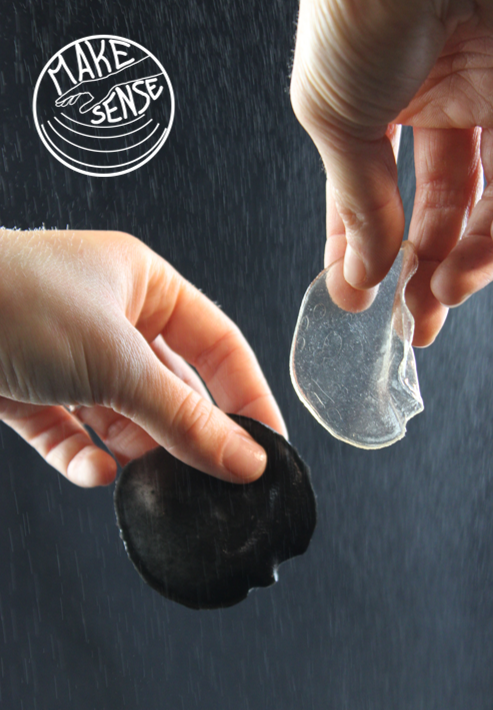
The front picture of MakeSense, created through iterating recipes by altering ingredients and measurements.
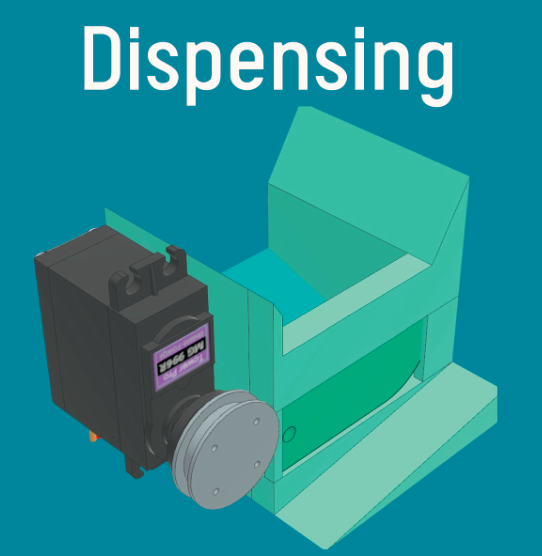
The visualization of our CBL4 dispensing system which I co-coded.
Creativity & Aesthetics

The demo day setup of Yggdrasil
People prefer visually appealing designs. (Liu et al., 2024) However, what is visually appealing changes as trends come and go. (Cheng et al., 2024) To create a sustainable design, you have to create a design that stays valuable and intuitive while the user will keep wanting to use it.
When working on Yggdrasil we had to keep in mind the design brief as it mentioned that our design is meant to be used in the year 2040. This forced me to work less with trends and more with human psychology in order to keep the products mainly symmetrical, intuitive and preferably adaptable.
The psychological connection to design motivated me to enroll in the course Brain, body & behaviour. This course helped me understand how intuitivity works on a neurological level and how to apply this not only in products but how they also could be used for media like websites and graphics. The combination of intuitivity for elderly for whom digital activities tends to be anything but intuitive is an topic I aim to learn about and work with during my internship in my B3.1.
Math, Data & Computing
Last year I set the goal to explore this Expertise Area by following a course outside of the Industrial Design faculty. Math, Data & Computing to me entails selecting and visualizing data to either understand complex problems or communicate the data to others. The combination of courses like Making sense of sensors (DAB100), Foundations of data analytics ( 2IAB1) and (per my goal) Data Management for Data Analytics (JBI050) offer a variety of knowledge about how to retrieve, filter and select the data as well as different ways to visualize it depending on your target audience.
I have used more circuitus techniques in code for similar goals during prototyping. Therefore I put my new knowledge from Data Management for Data Analytics to the test when creating new high-fidelity prototypes as well as for communicating data in posters and presentations.
During my internship I will work on optimizing a website for stakeholders based on, among other things, the data users generate when interacting with the site. This puts me in a position where I can work on and ask help when gaining experience in working with data.

The visualization of our CBL4 application concept
Business & Entrepreneurship
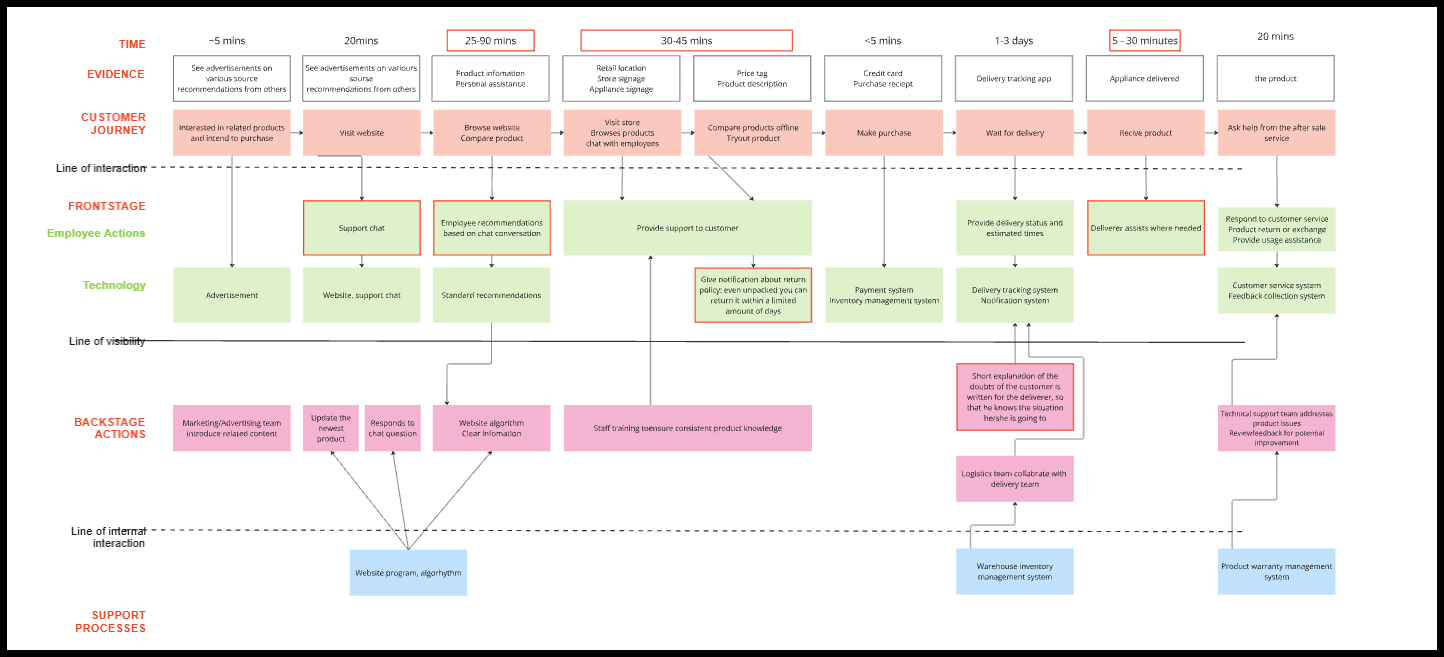
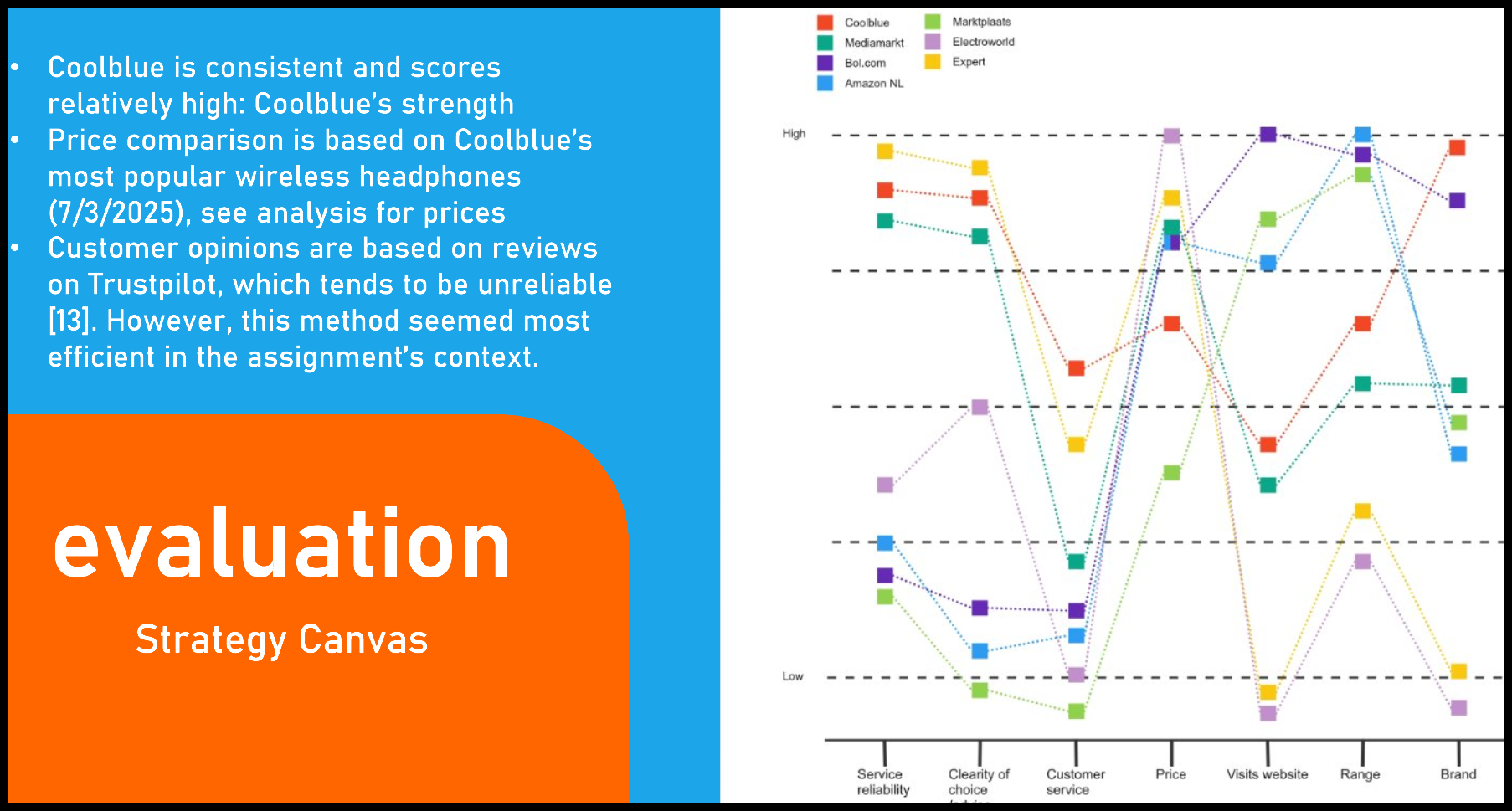
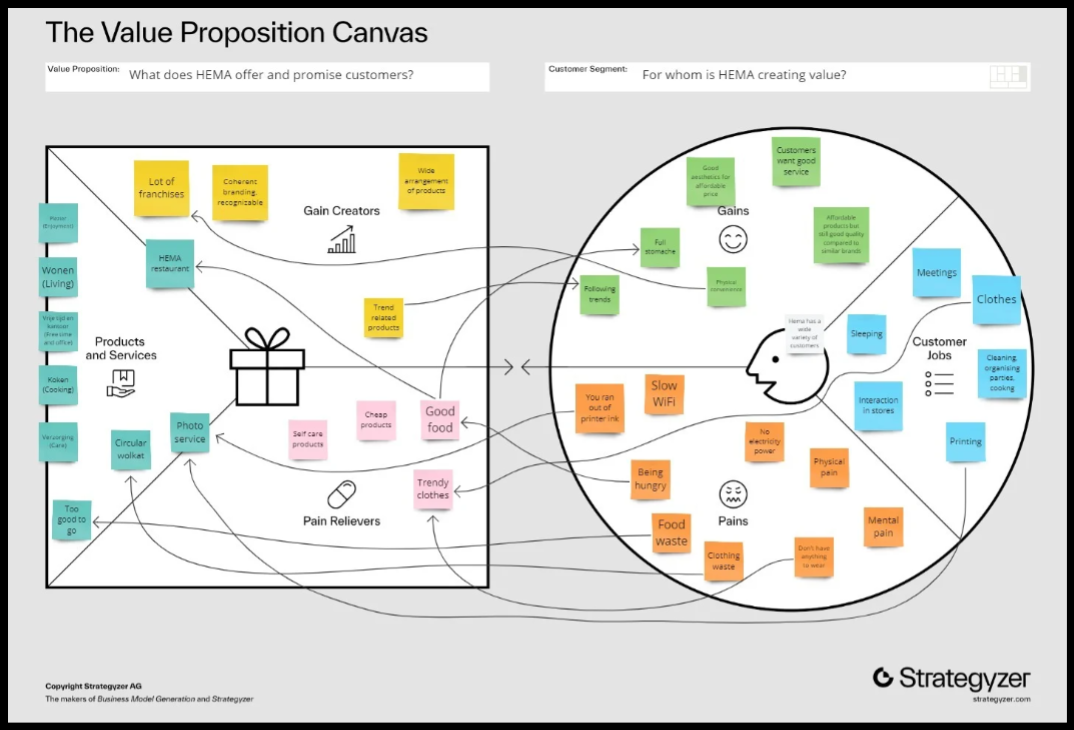
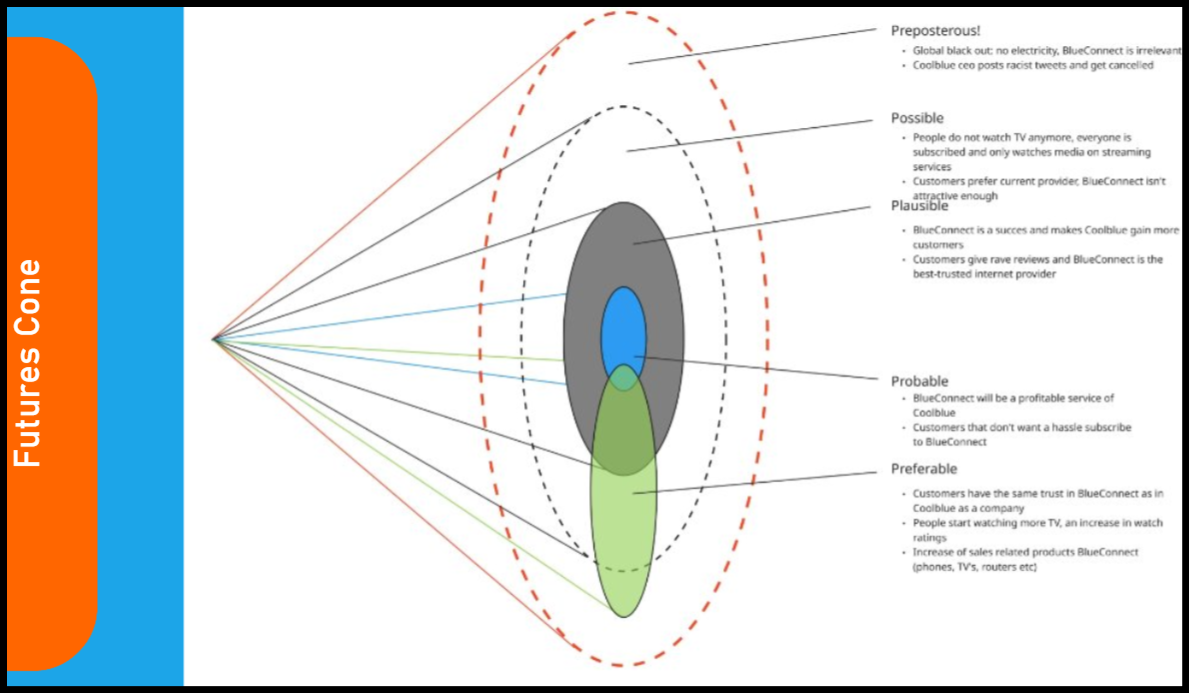
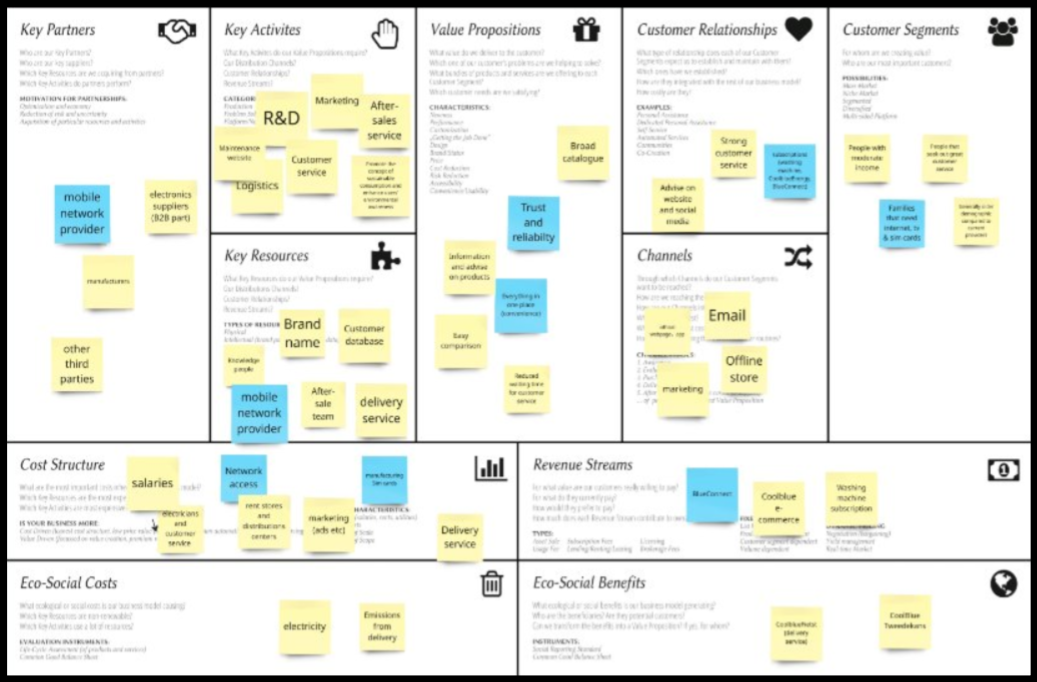
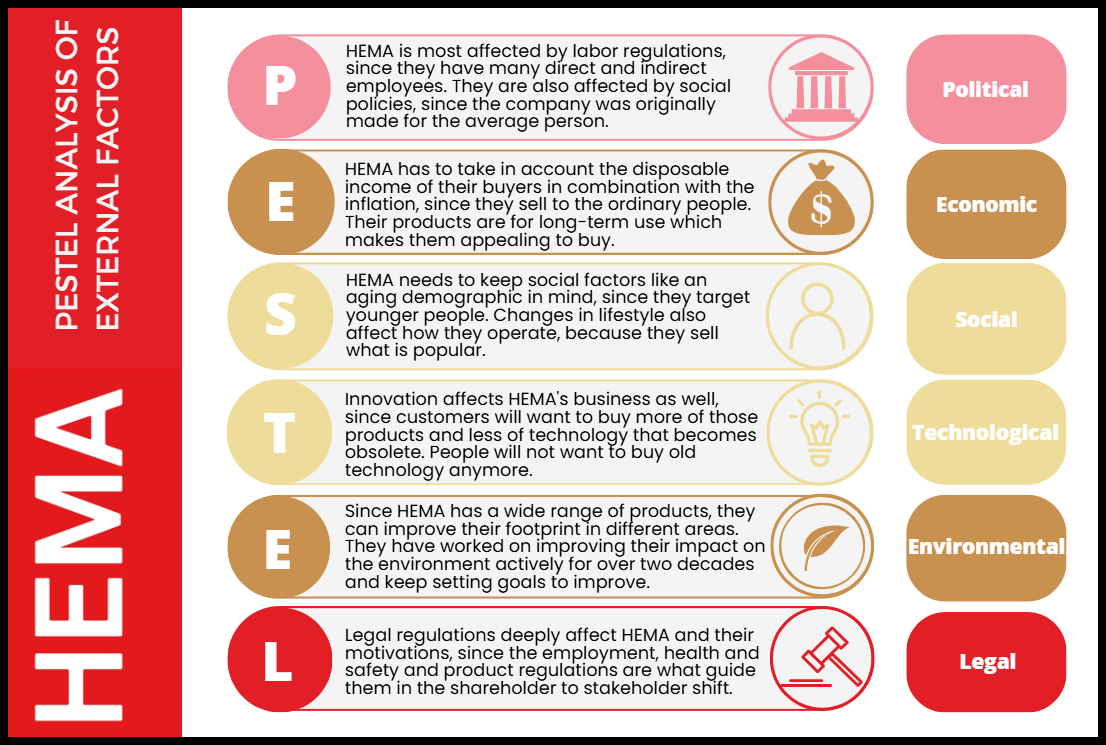
Business & Entrepreneurship pushes a designer to think past the idealized design and research what value the design adds and how that value can be realized. To do so competitors, existing intellectual property rights and possible stakeholders should be considered. In my courses Introduction to business design (DAB150) and Design innovation methods (DAB200) we have created multiple propositions and worked with a variety of models to gain insights in the different aspects of companies. The goal to create an improved concept for a company showed the complexity of optimalization.
Through contact with multiple companies of various sizes and with various intentions I have experienced a range of different organizational structures. I want to learn more about this and will make a start during my internship where I will experience the structure of the startup.
Click on a model to make it expand.
Professional skills
Thanks to extra curricular activities I have been in contact with multiple companies regarding networking opportunities and sponsorship deals. Through this experience have learned about the structures in differently sized companies. Thanks to this knowledge I have chosen to intern at a startup company for my B3.1. However, in the further future I'd like to work/do a project at a bigger company for the more specialized experience and skillset their employees have.

Image by Bent van 't Hof
Collaboration skills
I try to adapt to what the group needs and keep up with goals. I work together to optimize the shared knowledge that we can put in our work.
As a collaborator, I approach teamwork much like I approach design: I adapt to the group’s needs and to the people around me. I check in regularly with my teammates to ensure workloads feel manageable and our process fits our goals. Because I value open communication, I share my progress early, ask for help and feedback, and make sure that my work fits our vision. I also prioritize clear expectation management by creating a space where we define responsibilities, write down agreements, and work to make everyone feel comfortable to speak up.
Organizational skills
When working in project groups I often take on the task of documenting meetings and creating folders for an easy to navigate drive. These actions help my group members and myself to stay on the same page and create a clear communication.
During my part-time board year I have experienced the need for timely and clear communication to manage expectations on a bigger scale Emphasizing the need for order. However, since this experience involved more people and simultaneous actions, it has also learned me how to prevent myself from becoming a middle person when this was not essential to the communication.
Both examples however create a similar result of which I aim to change. By always working on documenting during meetings, my input sometimes gets lost in the discussion. This is a copy of the feedback I got during my cbl4 project when taking notes was rotated. Therefore, taking on less so called background tasks will allow me to be more present in discussions and advocate for my ideas during decision making moments.
Scientific Research & Academic Writing
I want my design decisions to be transparent, well-reasoned, and supported by evidence. Conducting scientific research is essential to guarantee these wishes. The experience in my study so far has trained me and keeps improving my skills of analyzing information critically, documenting my choices clearly and communicating insights in a structured way.
I keep track of feedback given to me by coaches, tutors and other students in order to improve my academic writing skills and help both me and my fellow students by reading their works. Which shows me new options in communicating through academic writing and helping them improve theirs.
Future plans and aspirations...
...for my expertise areas
As mentioned before there are specific aspects of each Expertise Area that I want to improve in.
- User & Society: Keep different stakeholders and perspectives in mind. While designing for a target group, everything around the target group should also be considered to make sure a design will be usable, which I will do during my internship as it is essential.
- Technology & Realization: I will practice how I can optimize writing code to make it more structured and readable for others by asking more frequent feedback from people instead of using an AI when finishing a part.
- Creativity & Aesthetics: Learn about intuitivity and how different target audiences impact the design choices that should be made. This will be done both by research as well as during my internship where the target audience for the product differs from those of my past projects.
- Math, Data & Computing: As I likely won't make high-fidelity prototypes in the upcoming semester I will expand this Expertise Area through visualizing data.
- Business & Entrepreneurship: Learn more about organizational structures starting at the structure of a startup, thanks to my internship.
...for my B3.1
I have chosen to do an internship to experience Industrial Design in a professional setting.
Since I will intern at a startup company tasks will be more diverse, I will use this to explore what role I would want to grow into. Therefore I will adjust my goals during and after my internship.
My internship will put me in a position to take multiple stakeholders into account. The combination of health workers, vulnerable elderly people and their family will be an interesting conflict of interests.
...for other activities
With my designs I try to keep a connection between the digital future and human nature, ensuring that, while technology keeps advancing, our psychological and cultural well-being won't be compromised. Ultimately, my goal is not to create the user experience, but to design the tools and environments that give independence, create space for meaningful human connections, and enable people to live their lives authentically. Therefore, I envision my Final Bachelor Project to be a part of the New Futures squad.
References
1. Ballisticarts. (2014, 5 mei). Heirloom Design and a Manufacturing Renaissance. Delphi. https://delphi.ca/2014/05/heirloom-design-manufacturing-renaissance/
2. Cheng, S., Yahaya, M. F. B., Rahman, A. R. B. A., & Tai, L. (2024). Emerging Aesthetic Trends in Product Design: Exploring Novelty, Technology, and Sustainability. www.masonpublish.org. https://doi.org/10.37420/j.adr.2024.048
3. Le Creuset: Garantie. (2026). Le Creuset. https://www.lecreuset.nl/nl_NL/garantie/lp004.html
4. Mahamuni, R., Kalyani, K., & Yadav, P. (2015). A Simplified Approach for Making Human Values Central to Interaction Design. Procedia Manufacturing, 3, 874–881. https://doi.org/10.1016/j.promfg.2015.07.344
5. Liu, Y., Li, K. J., Chen, H., & Balachander, S. (2024, 2 july). Crafting the Perfect Aesthetic: Product Design Strategies. American Marketing Association. https://www.ama.org/2017/11/15/the-ideal-look-managing-aesthetics-in-product-design
Maak jouw eigen website met JouwWeb